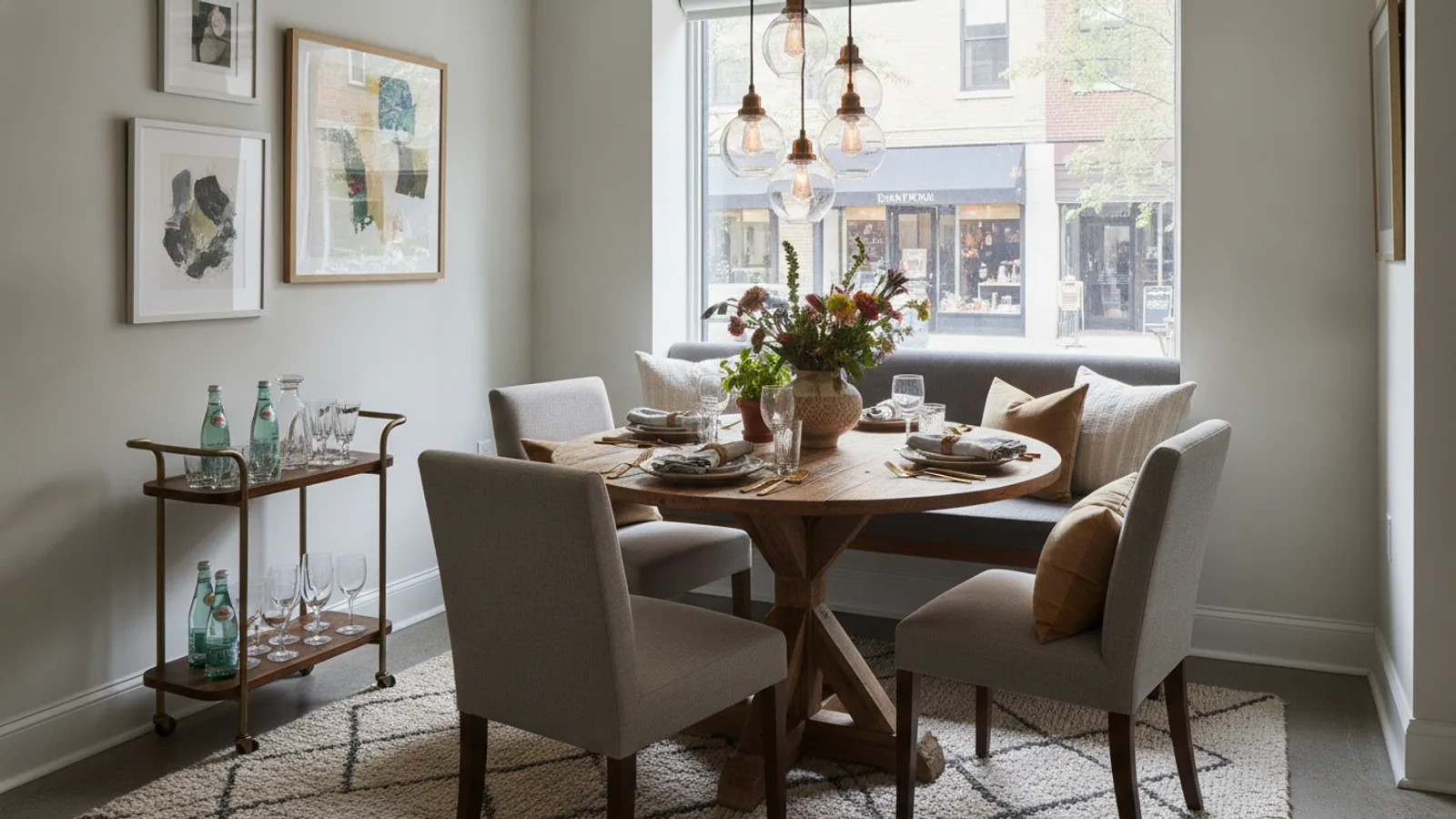
How To Make A Reading Corner Work With Flexible Lighting
A practical step-by-step guide to how to make a reading corner work with flexible lighting, including preparation, instructions, common issues, tips, and next steps.

How To Make A Reading Corner Work With Flexible Lighting
Creating a reading corner with flexible lighting means designing a space where you can adjust the light to match your activity, mood, and time of day. This guide walks you through choosing a location, layering different light sources, controlling brightness and color temperature, and using smart switches or dimmers so you always have the right light for reading, relaxing, or working. You will learn how to position lamps to reduce glare, how to use task lights for focused reading, and how to create ambiance with accent lighting. The steps are practical and can be adapted to any room size or budget. By the end, you will have a cozy, functional corner that invites you to pick up a book any time, whether it is sunny morning or late evening.
Fast Answer
- To make a reading corner work with flexible lighting, start with a comfortable chair and a side table, then layer three types of light: ambient (for general illumination), task (for reading), and accent (for ambiance). Use a dimmer switch or smart bulb so you can adjust brightness and color temperature from warm to cool.
- Place your main lamp so the light falls over your shoulder onto the book, not into your eyes. Add a floor lamp with a dimmer for ambient glow and a small table lamp for close work. Use smart plugs or app-controlled bulbs to adjust light without getting up.
Before You Start
- Measure your corner area to understand the space you have. Note the distance from the wall to where your chair will go, and the height of any existing shelves or tables. This helps you choose lamps that fit without crowding.
- Decide what activities you will do there: focused reading, browsing, crafting, or just relaxing. This determines the light levels you need and whether you need a bright task light or a softer glow.
- Check the location of power outlets. If there is no outlet nearby, plan for an extension cord or choose battery-operated or rechargeable lamps. This avoids tripping hazards and lets you place furniture flexibly.
- Gather your lighting tools: a floor lamp, a table lamp, a dimmer switch or smart plug, and perhaps a small clip-on reading light. If you already have a lamp, just make sure it takes a replaceable bulb and can be dimmed.
Step-by-Step Instructions
Select and Prepare the Spot
Choose a corner that feels separated from the main flow of the room—perhaps near a window but not directly under harsh overhead light. Measure the floor space to ensure your chair, side table, and lamps will fit comfortably. Move furniture away from radiators or heat vents to avoid overheating and to protect your books. If the corner is dark, paint the walls a light, warm color to reflect light better. Before you set up, decide on the chair orientation: you want to face the room or a window for natural light during the day, but also have a spot for lamps that won't cast shadows. Once you have cleared the area, vacuum or sweep to ensure no dust or debris will affect your lighting fixtures. This preparation makes the next steps easy to execute. Check that you have a clear path to outlets and that no cords will be stretched across the room. If you need an extension cord, place it along the wall and secure it with cord clips. This step creates a safe and clean canvas for your flexible lighting setup.
Set Up Your Main Task Light
Your main task light is the most important for reading. Position it so that the bottom of the lampshade is at eye level when you are seated, about 15 to 20 inches above the armrest of your chair. If you are using a floor lamp, place it slightly behind your dominant shoulder so the light falls onto your book without casting a shadow from your hand. If you are using a table lamp, put it on the side table, but adjust the angle so the light hits the page directly. The goal is to have even illumination across the page with no hot spots. A good way to check is to sit in the chair and hold a book as you would when reading. See if any glare bounces off the page; if so, tilt the shade or move the lamp. For a flex-arm lamp, you can bend the head to direct light precisely. Ensure the bulb is a cool white if you are reading for long periods because it reduces eye strain. Test different positions until you find the sweet spot where your eyes feel relaxed and the page is clearly lit. Remember that you can always adjust later, so start with a comfortable baseline and fine-tune.
Add a Dimmable Ambient Light
Ambient light is the general illumination that fills the room and softens harsh shadows. In your reading corner, this could be a floor lamp with an upward-facing shade that washes light across the ceiling, or a wall sconce that casts a warm glow. The key is to make it dimmable. You can use a dimmer switch installed on the wall, a smart plug that you control with your phone, or a bulb that has built-in dimming technology. Start by setting the ambient light to a medium brightness—enough to see the room but not so bright that it competes with your task light. When you are reading, you want the ambient light to provide a gentle halo around your visual field, reducing contrast between the bright page and the darker room. This prevents eye fatigue. If your ambient light is too bright, it will wash out your task light; if too dim, it creates a cave-like effect. The goal is a 3:1 ratio: the task light should be about three times brighter than the ambient light. Test different levels by turning the dimmer clockwise and counterclockwise until the room feels balanced. Over time, you will find the ideal setting for different times of day.
Layer in Accent Light for Ambiance
Accent lighting is not for reading but for creating depth and a cozy atmosphere. It can be a string of warm fairy lights along a shelf, a picture light illuminating a framed print, or a low-wattage LED candle on a side table. Place accent lights away from your direct line of sight so they do not cause glare or distraction. They should highlight architectural details or decorative items, drawing your eye to pleasant features and making the corner feel inviting. For example, you could install a small LED strip under a floating shelf to cast a soft glow on the wall. The brightness should be low—just enough to create a warm halo. Use accent lighting in the evening when you want to wind down, not when you need to focus. You can control it with a separate switch or a smart plug so you can turn it off with a voice command or your phone. When you are reading, you may want to turn accent lights down or off completely to reduce visual noise. The goal is to have maximum control so you can dial in the perfect ambiance for any occasion.
Install Smart Controls for Easy Adjustment
Smart controls are what make your lighting truly flexible. You can use smart bulbs that connect to your home Wi-Fi and are controlled by a mobile app, a voice assistant, or a physical remote. Alternatively, a smart plug can turn a regular lamp into a controllable device. Start by downloading the app for your smart bulb or plug, and pair it with your phone. Follow the manufacturer's instructions to connect it to your home network. Once connected, you can adjust brightness, color temperature (warm to cool), and even set schedules. For example, you could program a reading mode that sets your task light to a bright cool white and your ambient light to a soft warm glow. In the evening, you might switch to a warmer dim setting. This control is invaluable because you can make changes without getting up from your chair. If you do not want to invest in smart technology, a simple plug-in dimmer or a dimmer switch installed by an electrician works just as well for manual control. The key is to have some way to smoothly adjust your lights, not just an on-off switch.
Test and Fine-Tune Your Setup
Finally, test your setup in real conditions. Sit in your chair at different times of day—morning, afternoon, and night. Note how the light falls on your book and how your eyes feel after 20 minutes of reading. Adjust the angles, brightness, and temperature until you find a combination that is comfortable. Create a simple checklist: can you read for 30 minutes without eye strain? Can you see the text clearly without shadows? Does the overall ambiance match your mood? During the day, you may want to draw curtains to reduce daylight glare; at night, you might raise the ambient light to avoid a cave-like feeling. Do not be afraid to swap lamps or change bulb types if something is not working. Your goal is to have a setup that adapts to you, not the other way around. Once you are satisfied, take a picture of your settings or make notes, so you can easily re-create the ideal lighting scene later. Remember that flexibility is key, so leave room to make small changes as your preferences evolve.
Quick Reference
| Situation | Action | Why it helps |
|---|---|---|
| Reading at night with the main ceiling light on | Turn off the ceiling light, turn on your task lamp and set it to a bright cool white, then adjust your ambient light to a dim warm setting. | Overhead ceiling lights are usually harsh and create glare on pages; layered lamps give you direct light for the page and reduce eye strain. |
| You want to relax and have a cup of tea in your corner | Lower the brightness of your task light or switch it off, and raise the ambient and accent lights to a soft warm glow. | Dimmed, warm light signals your brain to wind down, making it easier to relax and enjoy your beverage without the urge to read. |
| Working on a craft or detailed project in your corner | Move your task lamp so it shines directly on your hands or the item, set it to a bright neutral white, and increase the ambient light to reduce shadows. | Detailed tasks need high, shadow-free illumination that is neither too warm (which distorts colors) nor too dim (which strains eyes). |
Common Issues
- The page is too bright or has a glare that makes reading difficult: Position your lamp so the light comes from the side and behind you, not directly over the page. Use a lamp with a shade that directs light downward, and choose a matte-paper book cover or use a reading clip-on to control light.
- The corner feels too dark even with the lamps on: Add an extra ambient light source, like a floor lamp that bounces light off the ceiling, and consider painting the walls a lighter color. Also, make sure your bulbs are the correct wattage and not dimmed too low.
- The light flickers or changes brightness unexpectedly: Check all connections, replace any loose bulbs, and ensure the dimmer switch is compatible with your bulbs. If you are using smart bulbs, check for Wi-Fi interference or update the app.
Advanced Tips
- Use a light meter app on your phone to measure the lux level on your book page; a comfortable reading level is between 300 and 500 lux, but adjust to your own preference.
- Install a dimmer switch for your wall sconces or overhead fixture so you can create a smooth gradient from full brightness to a soft glow, using a slider for more precise control.
- Consider using a task light with a clip so you can attach it to your book or tablet, and choose a light with multiple color temperature modes to shift from cool white for daytime to warm white for evening.
Final Checklist
- Position your task lamp so it lights the book without casting a shadow or causing glare.
- Install a dimmer or smart control for at least one of your lamps.
- Add an ambient light that is dimmable and placed higher than your task light.
- Set up accent lighting to add warmth and depth for relaxation times.
FAQ
What is the best color temperature for a reading light?
For reading, a neutral to cool white light around 4000-5000 Kelvin is often best because it helps with focus and reduces eye strain. Warmer colors around 2700-3000 Kelvin are better for relaxing. Look for bulbs labeled 'neutral white' or 'cool daylight.' Adjustable color temperature bulbs offer maximum flexibility, letting you switch from cool to warm as the day progresses.
Can I use a single floor lamp for both ambient and task lighting?
You can, but it is not ideal because the light from a single source at one height cannot serve both purposes effectively. You would have to compromise between having enough light for reading and having a general glow. A better approach is to use one lamp for task light and a second lamp, perhaps with a dimmer, for ambient. If you must use only one, choose a lamp that has two separate light sources or a movable arm.
Do I need a smart bulb or can I use a regular dimmer?
Both options work. A regular dimmer switch installed in your wall is wired into the circuit and works with dimmable LED bulbs. A smart bulb connects to your phone and can be dimmed via app or voice control, but it requires a compatible hub or Wi-Fi. Smart bulbs offer more features like scheduling and color change, but they are more expensive. For simple dimming, a standard dimmer is more reliable and cost-effective.