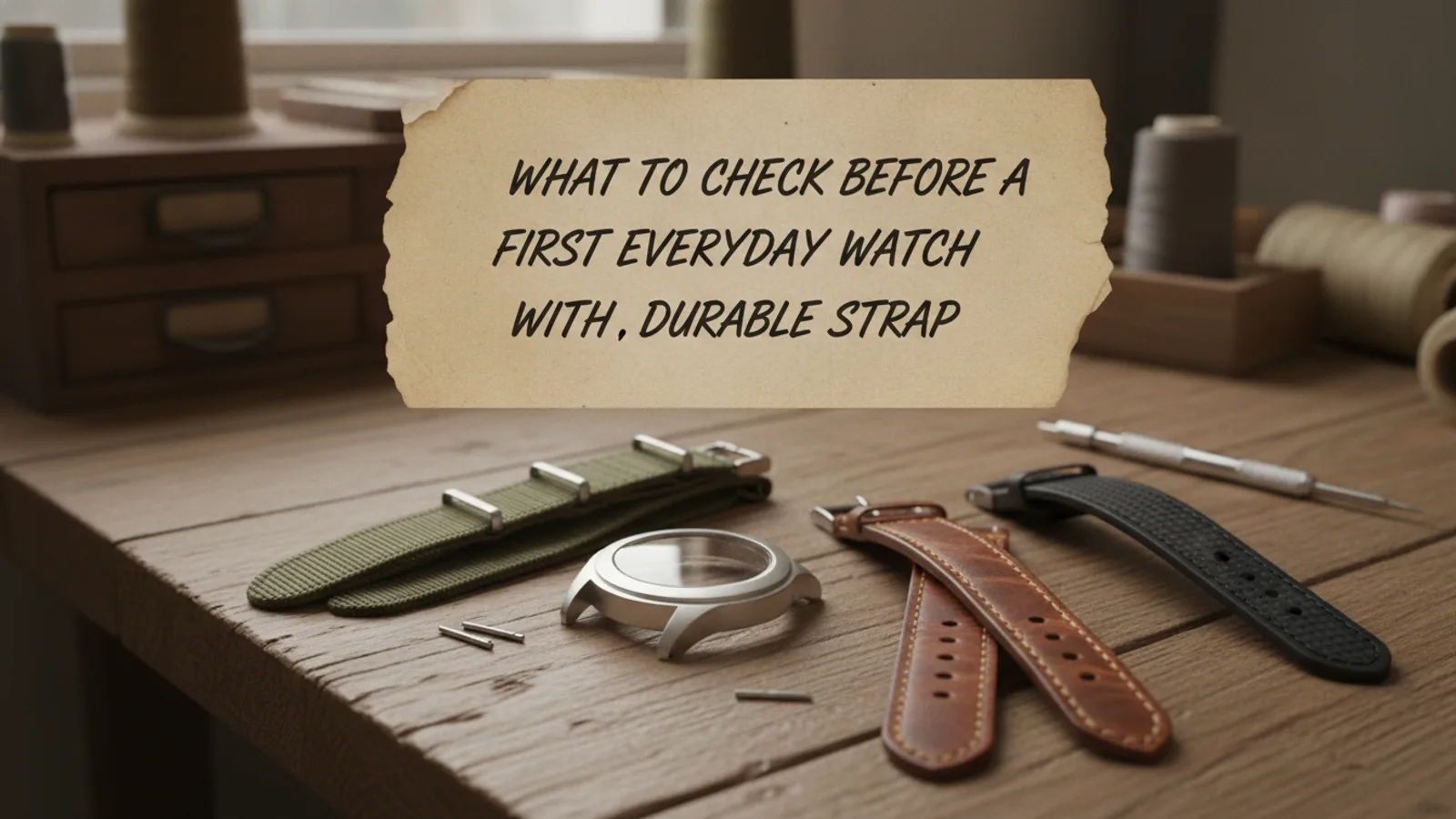
What To Check Before A First Everyday Watch With A Durable Strap
A practical step-by-step guide to what to check before a first everyday watch with a durable strap, including preparation, instructions, common issues, tips, and next steps.
What To Check Before A First Everyday Watch With A Durable Strap
Before wearing a durable-strap watch for everyday use, check the strap attachment, case material, water resistance, clasp security, and fit. This guide walks you through a practical pre-wear inspection that takes only a few minutes, helps avoid scratches, accidental drops, or strap failure, and ensures the watch is comfortable and ready for daily activities.
Fast Answer
- Check that the strap is firmly attached to the watch case and the spring bars are fully seated without any wiggle.
- Confirm the watch fits snugly on your wrist without being too tight, and secure the clasp or buckle properly.
Before You Start
- Gather a soft cloth, a small flashlight, and a magnifying glass if you have one, to inspect the strap and lugs closely.
- Identify the type of strap (rubber, silicone, leather, nylon, or metal) and know its care requirements for your first wear.
- Prepare a bowl of lukewarm water with a drop of mild soap for cleaning the strap before first use, if desired.
- Find a well-lit area with a flat surface so you can safely handle the watch and avoid dropping it.
Step-by-Step Instructions
Inspect the Strap Attachment Points
Begin by turning the watch over so you can see the back and the area where the strap meets the watch case, called the lugs. Use a magnifying glass or your fingers to inspect the gap between the strap and the lug. You should see a small metal bar (the spring bar) that connects the strap to the watch. Gently press on the strap from side to side; if there is any noticeable play or movement, the spring bar may not be fully seated. A properly attached strap should feel solid with no lateral movement. If you detect any looseness, remove the strap and reinsert the spring bar, ensuring it clicks into the tiny holes in the lug. This check prevents the strap from suddenly detaching while you wear the watch, which could lead to dropping it. Take your time and be careful, as spring bars are small and can easily fly out if you are not cautious.
Examine the Strap Material for Defects
Look closely at the entire length of the strap, both the top and the underside. Check for cracks, cuts, or weak spots, especially near the holes where the buckle or clasp attaches. For rubber or silicone straps, flex the strap gently to see if any white or thin areas appear, which could indicate weakening. For leather straps, inspect for dry spots or peeling. For metal or nylon straps, check for any sharp edges, damaged links, or frayed threads. A small defect can become a big problem during daily wear, potentially causing the strap to break and the watch to fall. If you notice any issue, consider replacing the strap before the first wear. Even a new strap can have manufacturing flaws, so a thorough inspection is essential. Also, check the keepers (the small loop that holds the excess strap) and ensure they are not cracked or stretched, as they keep the strap neatly tucked away.
Check the Clasp or Buckle Mechanism
Your watch likely has either a buckle (like a traditional pin-and-hole buckle) or a deployant clasp (a fold-over mechanism). Test the buckle or clasp several times to ensure it opens and closes smoothly. For a pin buckle, make sure the pin fits snugly into the holes and does not slip out easily. For a deployant clasp, press the buttons or release levers to see that they operate crisply and the clasp stays closed when you shake your hand gently. If the clasp is too stiff, it may be difficult to secure, and if it is too loose, it could open unexpectedly during wear, risking the watch sliding off. Also, check the area where the strap passes through the buckle: there should be no excessive friction that would wear the strap quickly. A reliable closure is crucial for keeping the watch securely on your wrist throughout the day.
Confirm the Strap Fits Your Wrist Properly
Place the watch around your wrist and fasten it using the hole that gives you a comfortable yet secure fit. You should be able to slide one index finger between the strap and your wrist. If the strap is too tight, you might see marks on your skin, and if it is too loose, the watch may slide around. This is important not only for comfort but also for the health of your skin and the longevity of the strap. A too-tight strap can restrict blood flow and cause skin irritation, while a loose strap can lead to the watch rotating and potentially getting knocked against surfaces. Choose the tightest hole that still allows a small gap, but also consider that you might need to adjust for different weather or activities. If the strap has extra length, ensure the tail is tucked under the keeper to prevent it from catching on objects.
Verify the Watch Case Is Secure
While the strap is the focus, you also need to ensure the watch case itself is firmly connected to the strap. Hold the watch case in one hand and gently tug the strap from various angles. There should be no wobble or gap between the case and the strap. If you feel any movement, the spring bars might be incorrectly sized or the lug holes could be worn. In some cases, the strap's quick-release pins (if it has them) might not be locked. Check the case back and the crown (the small button used to set the time) to ensure they are tight as well. A securely attached case is essential because a loose fit can cause stress on the spring bars over time, increasing the risk of failure. Also, inspect the area where the case meets the strap for any dirt or debris that could interfere with the connection.
Perform a Final Wear Test
After you have checked the attachment, material, clasp, and fit, it is time for a final wear test. Put the watch on your wrist and fasten it as you normally would. Move your wrist through a range of motion: bend it up and down, side to side, and rotate it. Shake your hand gently and simulate everyday actions like pushing a door open or lifting a light object. The watch should stay in place without excessive sliding or the strap loosening. Also, pay attention to how the strap feels on your skin; if there is any itching or irritation, you might want to consider a different material. This test ensures that the watch is ready for daily wear and that you have done everything to prevent a mishap. If everything feels good, you're all set to enjoy your watch with confidence.
Quick Reference
| Situation | Action | Why it helps |
|---|---|---|
| You notice the strap moves slightly from side to side at the watch case. | Remove the strap and re-seat the spring bars into the lug holes; press firmly until you hear a click. | A loose fit means the spring bar is not fully engaged, and the strap could detach when you move your wrist sharply. |
| The clasp opens on its own when you shake your hand gently. | Check that the clasp's locking mechanism is clean and not worn; if necessary, adjust tension or replace the strap. | An unexpected opening can cause the watch to fall and get damaged, so the clasp must hold firmly during normal movement. |
| You feel a rough edge on the strap where it touches your skin. | Soak a cloth in warm water and rub the rough area gently to smooth it, or consider replacing the strap if it remains sharp. | A rough edge can cause skin irritation and discomfort, and over time, it may fray or tear, weakening the strap. |
Common Issues
- The strap has a small crack near the lug, but the watch is still wearable.: Do not wear the watch. Take a close look at the crack with a magnifying glass; if it is superficial, you might be able to apply a tiny amount of flexible adhesive, but if it goes through the full thickness, replace the strap. For safety, it is best to replace the strap before wearing, because a crack can expand over time and lead to sudden breakage.
- The buckle pin does not go through the hole easily, making it hard to fasten.: Use a toothpick to gently enlarge the hole, but be careful not to tear the strap. If the hole is too small and the pin is tight, it may cause wear. Alternatively, consider adding a new hole with a leather punch. If the issue persists, check if the buckle is misaligned and adjust the strap or replace the buckle.
- The watch slides up and down even on the tightest hole.: The strap may be too large for your wrist. Try using a shorter strap if possible, or consider adding a sizing hole if the material allows. If the strap has a sliding clasp, adjust it to a smaller size. If the watch is heavy, a loose fit will lead to constant movement, which is uncomfortable and may cause the strap to wear unevenly.
Advanced Tips
- For metal bracelets, check the adjustment holes in the links: use a fine pin to adjust the length before first wear, and take care not to scratch the polished surfaces.
- If your strap has quick-release pins, practice removing and reinserting them a few times before first wear to become comfortable with the mechanism and to confirm they lock securely.
- Consider the environment where you'll wear the watch. For hot, humid conditions, a rubber or silicone strap may be more comfortable, but it still needs an occasional rinse with clear water to remove sweat and dirt.
Final Checklist
- Strap is firmly attached with no side-to-side movement at the lugs.
- Clasp or buckle closes and stays closed when you shake your wrist gently.
- Fit allows a snug but comfortable gap between strap and wrist (one finger).
- No sharp edges or rough areas on the strap that could irritate skin.
FAQ
How often should I check my watch strap for damage?
It is a good habit to do a quick check every time you put on the watch. Look at the attachment points, run your finger along the strap, and test the clasp. Additionally, do a more thorough inspection (like the one in this guide) at least once a month, or if you notice any new discomfort or visible wear. Regular checks help catch problems early before they become dangerous.
Can I wear my durable strap watch while doing sports or swimming?
Yes, if the strap is designed for that activity, but always confirm the strap's material and water resistance. For swimming, ensure the case is water resistant as well. Check your watch's manual or manufacturer's instructions for the water resistance rating. Also, after exposure to water, especially saltwater or chlorinated water, rinse the strap with fresh water and dry it thoroughly to prevent material degradation.
What should I do if the strap still feels loose after adjusting to the smallest hole?
The strap might be too long for your wrist. Look for a strap that is available in a shorter length, or consider a strap with a sliding clasp that gives more incremental adjustment. Some materials like leather can have additional holes punched, but be cautious not to weaken the strap. If the watch itself is heavy, a loose fit will be uncomfortable, so it's worth investing in a properly sized strap.