How To Plan A Versatile Smart Casual Wardrobe For The Working Week
A practical step-by-step guide to how to plan a versatile smart-casual wardrobe for the working week, including preparation, instructions, common issues, tips, and next steps.
How To Plan A Versatile Smart Casual Wardrobe For The Working Week
This guide helps you build a versatile smart-casual wardrobe for the working week, focusing on mix-and-match pieces, color coordination, and practical maintenance. You'll learn to assess your current clothes, plan a capsule of essentials, choose fabrics that travel well, and create outfits that transition from meetings to evenings. The steps cover budgeting, shopping, and styling, with tips on fit, seasonal adaptation, and care. By the end, you'll have a clear system for dressing with confidence and reducing daily decision fatigue, all while staying within a cohesive style that suits your workplace and personal taste. No specific brands or price points are mentioned, so you can adapt the principles to your local stores and budget. This isn't about owning many clothes but owning the right ones that work together. You'll learn to evaluate quality, recognize your color palette, and build a capsule that simplifies mornings and elevates your professional presence.
Fast Answer
- Assess your current wardrobe and identify gaps, then choose a neutral base color palette (navy, grey, beige, white) and add two or three accent colors that complement each other for easy mixing.
- Invest in key smart-casual pieces: tailored chinos, dark jeans, a blazer, crisp shirts, a knit polo, and versatile shoes like loafers or clean trainers, ensuring they fit well and are made of quality fabrics.
Before You Start
- Audit your existing clothes: take everything you wear for work out of your closet, try on each piece, and note which items are comfortable, stain-free, and have a modern fit. Set aside anything that doesn't make you feel confident.
- Define your workplace dress code by observing what colleagues wear, but also consider your own comfort and style preferences. This will guide whether you lean more casual (e.g., dark jeans) or more formal (e.g., tailored trousers).
- Choose a color palette of two to three neutral base colors (like navy, mid-grey, and beige) and pick one or two accent colors (such as burgundy, forest green, or mustard) that harmonize with the neutrals. This ensures your pieces mix easily.
- Take your measurements (neck, chest, waist, inseam, and sleeve length) so you can buy clothes that fit properly without alterations, or budget for tailoring. Many stores offer free basic tailoring on trousers and sleeves, which can make an off-the-rack item feel custom.
Step-by-Step Instructions
Assess Your Current Wardrobe and Identify Gaps
Start by pulling out every piece you currently own that you might wear for work – trousers, shirts, knitwear, jackets, and shoes. Lay them on a bed or clean floor, and examine each item for fit, condition, and color harmony. Ask yourself: Does this fit well in the shoulders and waist? Does it have any stains or pilling that you can't repair? Would it match with at least three other items if you picked them at random? Honestly evaluate whether each piece serves a purpose in your rotation. Put anything that fails these tests into a donate or repair pile. After this audit, you'll see which categories are overrepresented and which are missing. For example, many people have too many patterned shirts but not enough plain ones. This clarity prevents you from spending on redundant items and focuses your budget on genuine needs. It also gives you a concrete list to take shopping, so you don't get swayed by impulse buys.
Define Your Personal Smart-Casual Style
Next, articulate what smart-casual means to you within your workplace and lifestyle. Scan through your daily activities: Are you mostly at a desk, meeting clients, or moving around? Do you need to transition to after-work events? Look at photos of outfits that you admire, but note that you're not copying anyone – you're extracting principles. Decide on a rough proportion: maybe you want 70% chinos and 30% dark jeans, or vice versa. Also consider the level of formality: a blazer might be essential for some, while others may rely on knit polo shirts. Write down a simple style statement, like 'I want to look put-together but relaxed, using neutrals with one accent color.' This becomes your decision-making filter. When you shop, you'll ask, 'Does this fit my statement?' If it doesn't, you skip it. This step saves you from buying clothes that never get worn because they clash with your daily life.
Plan Your Capsule Wardrobe on Paper
Create a written or digital list of the essential pieces you need for a week of work, based on your audit. Aim for a capsule of about 30 to 35 pieces, including shoes and accessories, but you can start with fewer. List the specific items: five to seven shirts (mix of long sleeve and short sleeve), two to three pairs of chinos, one or two pairs of dark jeans, one or two blazers or sport coats, two to three knitwear items (like crewneck sweaters), and a few pairs of shoes (e.g., loafers, derbies, clean sneakers). For each category, write the color you want and the fabric you prefer. This plan helps you see the big picture and avoid buying duplicates. It also makes each shopping trip efficient because you know exactly what you're looking for. When you later lay out your outfits for the week, you'll see that this capsule can create at least ten different combinations, so you never repeat an outfit twice in a month.
Choose Quality Fabrics and Construction
When you shop, prioritize fabric quality and construction over brand names. Look for natural fibers like cotton, linen, wool, and cashmere, which breathe and drape better than synthetics. For trousers and shirts, check the fabric weight – it should feel substantial but not stiff. Examine the stitching: seams should be straight, with no loose threads. Look at the buttons – are they securely attached? Check the inside of the garment for finishing details like taped seams and clean hems. For example, a well-made blazer will have functioning buttons on the sleeves and a pocket lining that's not too thin. Bedding down on these details means your clothes will last longer and maintain their shape after many washes, saving you money in the long run. Don't be afraid to ask a salesperson about the fabric blend and how to care for it. The result is that your daily uniform feels comfortable and performs well, boosting your confidence.
Shop Strategically with a List and a Budget
Before you shop, set a realistic budget for filling the gaps in your wardrobe, but remember that this guide does not mention specific prices. Focus on allocating more money to items you'll wear heavily, like shoes and trousers, and less to trendier pieces like a patterned shirt. Make a list of exactly what you need from your capsule plan, and stick to it. When you enter a store, scan for the colors and fabrics you've chosen first. Try on items and assess how they fit – shoulders should line up, sleeves should end at your wrist bone, trousers should break cleanly over your shoes without pooling. Move around to ensure comfort. If something needs alterations, factor in that cost and time. Buy only items that pass this test, and avoid impulse purchases that don't fit your list. This approach prevents you from returning home with a bag of clothes that don't match anything, and it ensures your spending is deliberate and effective.
Build Outfits and Test Combinations
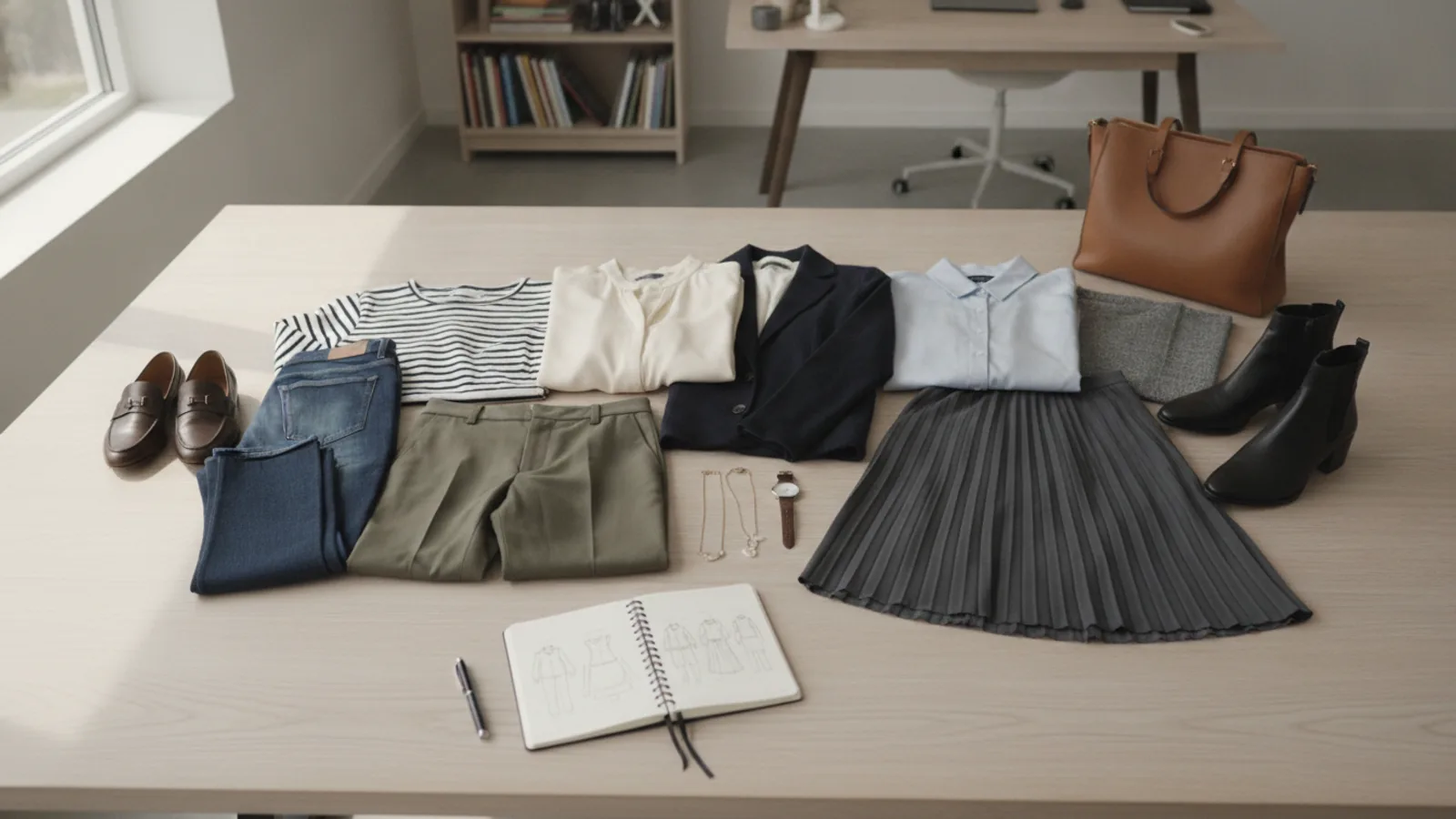
After you've acquired your new pieces, spend an hour laying out all your work clothes and creating at least five complete outfits for the week. Think in terms of layers: start with a base (shirt or t-shirt), add a middle (sweater or cardigan), and top with a jacket (blazer or chore coat) if weather allows. Mix different textures and colors to add interest without clashing. For example, pair navy chinos with a white oxford shirt and a grey crewneck, or dark jeans with a burgundy polo and an unstructured blazer. Take photos of each outfit so you have a visual reference. This process helps you see if you have any holes in your rotation – perhaps you're missing a belt that matches your shoes, or a light layer for transitional weather. Adjust your plan accordingly. This pre-planning eliminates the morning rush and gives you confidence that you look appropriate for any workday.
Quick Reference
| Situation | Action | Why it helps |
|---|---|---|
| You have a morning meeting with a client and then an afternoon at your desk with no external appointments. | Wear a tailored blazer over a plain crewneck t-shirt or a knit polo, paired with well-fitted dark jeans and clean leather loafers. Roll your sleeves on the knit shirt to keep it relaxed. | This outfit reads as put-together for the client meeting, but the jeans and knit fabric keep it comfortable for focused desk work. The blazer and jeans combination is the essence of smart-casual. |
| It's a casual Friday, but you know a senior manager might drop by your workspace during the afternoon. | Choose a mid-weight chino in a neutral shade, a chambray or Oxford shirt (untucked), and a pair of clean minimalist sneakers. Add a casual jacket like a quilted vest or a bomber over the shirt. | Chinos and a button-down are smart-casual staples, but the untucked shirt and sneakers keep it relaxed for Friday. The addition of a jacket elevates the look given the potential visitor. |
| You have an important presentation in the afternoon, and you need to transition from an active morning where you might be moving around. | Opt for an athletic-fit performance chino or tailored stretch trouser, a moisture-wicking polo shirt, and a lightweight unstructured blazer in a breathable fabric like cotton or linen. Keep the shoes as clean white sneakers or loafers. | The performance fabric and relaxed fit allow easy movement and keep you cool, yet the blazer and polished trousers give you a crisp, authoritative appearance for the presentation. This combination balances comfort and professionalism. |
Common Issues
- My clothes are all different shades of blue or brown, so they don't really match each other, and I end up repeating the same two outfits.: Start fresh by evaluating your current pieces and donating any that are too off-palette. Then, choose a cohesive palette: for example, navy, mid-grey, and charcoal as neutrals, with one accent like burgundy or forest green. When you buy new items, force yourself to stick to those colors. This ensures everything can mix and match, giving you more unique outfit combinations.
- I bought a blazer and some chinos, but they don't fit well because my posture and body shape make standard sizing tricky.: Take your measurements (chest, waist, shoulder, sleeve) and use them to select the correct size. Then, invest in a local tailor to adjust the waist and hem of trousers, and possibly take in the blazer's sleeves or side seams. A good fit can transform a budget item into a luxurious-feeling piece. Alternatively, look for 'athletic fit' or 'slim straight' cuts that accommodate different proportions.
- I've accumulated many shirts, but they all look the same, and I feel boring at work.: Audit your shirts and identify which ones are truly different – maybe a few have subtle textures or patterns. Introduce variety by adding two to three new shirts with different collars: a button-down collar, a club collar, or a linen shirt. Also, play with fabric textures like chambray, oxford, and poplin. Pair them with varied knit layers in different colors to create distinct looks without breaking the 'mix and match' rule.
Advanced Tips
- Learn to do simple alterations yourself, like sewing on a button or hemming a pair of pants, so you can buy second-hand or sale items with confidence and adjust them to your exact size.
- Incorporate accessories like a leather watch, a patterned pocket square, or a quality belt to add visual interest and elevate a basic outfit without adding bulk to your wardrobe.
- Develop a 'uniform' system where you rotate a few core outfits based on the day's schedule, but change your accent piece (like a sweater or tie) to keep things fresh while reducing decision fatigue.
Final Checklist
- Hold each piece in your wardrobe up to your chosen color palette and confirm that it coordinates with at least four other items you own.
- Check that your shoes are clean and in good repair, and that you have at least one pair that works for both formal and casual days, e.g., loafers or minimalist sneakers.
- Try on your planned outfits for Monday through Friday to ensure they fit comfortably and you feel confident; make adjustments for weather by having a light jacket or layer.
- Schedule a seasonal review to swap out heavy knits for lighter fabrics, and note any items that need replacing due to wear or style drift.
FAQ
How many pieces do I really need to start a smart-casual wardrobe?
A good starting point is a capsule of 25-30 items, including shoes and outerwear. Specifically, aim for 5-7 shirts, 3-4 pairs of trousers (mix of chinos and jeans), 2-3 knitwear pieces, 2 jackets, and 3 pairs of shoes. This gives you enough to create two weeks of different outfits without repeating, and it's easy to manage. You can adjust based on your work requirements and climate, but the key is that every piece must mix with at least three others.
What if my office has no strict dress code? How do I avoid dressing too casually?
Even with a relaxed dress code, it's wise to look put-together. Avoid wearing faded, ripped, or athletic clothes. Instead, choose chinos or dark jeans, and pair them with collared shirts or clean t-shirts in quality fabrics. Always have a blazer or jumper at your desk for any last-minute video calls or impromptu meetings. A good rule is to dress for the job you want, not the job you have, so aim to look slightly more polished than your peers.
How can I keep my smart-casual clothes looking good over time?
Follow the care labels carefully, but in general, wash shirts and knitwear in cold water to prevent shrinking and fading, and hang them to dry instead of using a dryer. Iron or steam everything regularly, and use a fabric shaver to remove pilling. Rotate your shoes and use shoe trees to maintain their shape. Also, consider having trousers professionally dry-cleaned only when needed, as frequent dry-cleaning can wear out fabric.