How To Choose Trousers For A Flexible Working Week
A practical step-by-step guide to how to choose trousers for a flexible working week, including preparation, instructions, common issues, tips, and next steps.
How To Choose Trousers For A Flexible Working Week
Choosing trousers for a flexible working week means balancing comfort, durability, and style across different settings—from home offices to client meetings. This guide helps you assess your week, pick versatile fabrics and fits, build a small but effective wardrobe, and care for your trousers so they last. You will learn what to look for when shopping, how to test fit and movement, and how to rotate pieces to keep your look fresh without buying a lot. Whether you work remotely, hybrid, or in a job with varied dress codes, these steps will simplify your choices and keep you comfortable and confident from Monday to Friday.
Fast Answer
- Focus on stretch fabrics like cotton with a little elastane, and choose a straight or slim-straight fit that allows easy movement while looking polished.
- Pick neutral colors (navy, gray, khaki) that can be dressed up or down, and buy two or three pairs to rotate throughout the week.
Before You Start
- Review your typical week: note which days you need a more formal look, which are casual, and which are a mix, so you know what your trousers really need to do.
- Measure your waist, hips, and inseam accurately with a soft tape measure, and keep those numbers handy when shopping online or in stores.
- Check your current trousers: which ones are most comfortable and flattering? Identify what you like about them—fabric, fit, pockets—so you can replicate that in new purchases.
- Set a rough budget you are comfortable with, remembering that a few quality pairs can replace many cheap ones, but you never need to spend a fortune.
Step-by-Step Instructions
Assess Your Week's Dress Code Variations
First, write down what you actually do from Monday to Friday. Do you have video calls where only a polished top shows? Do you commute to an office, visit clients, or work at a café? List each day and the level of formality you need. For example, Monday might be a team meeting in the office (smart casual), Tuesday is a client presentation (formal), Wednesday is working from home (comfort), Thursday is a workshop (active), and Friday is a casual day. Once you have that list, circle the most common level—probably smart casual or business casual. That becomes your baseline. Then note occasional needs, like a formal event or a day of heavy walking. This assessment tells you what fabrics, fits, and colors to prioritize. It also prevents you from buying trousers that are too casual for important days or too formal for your usual comfort. A practical check: if you have more than three days where you need a jacket, choose a tailored fit; if most days are relaxed, choose a more relaxed fit with stretch.
Choose Fabrics that Combine Comfort and Polish
Fabric is the single most important factor in how trousers look and feel all day. For a flexible working week, you want a fabric that breathes, resists wrinkles, and has some stretch. Cotton blends with a touch of elastane or spandex are excellent—they give you a classic cotton feel with ease of movement. Wool blends are great for formal days because they look sharp but can also be comfortable, but they may be warmer. Linen is cool for summer but wrinkles easily, so save it for casual warmer days. Avoid 100% polyester because it can feel sweaty and shiny. A practical check: look at the fabric label and feel the material in the store. Squeeze the fabric in your hand and release it—if it springs back quickly, it will retain its shape well. Also, hold the trousers up to the light; if you can see through them, they are too thin for most work settings. Aim for a fabric weight that suits your climate but that feels substantial without being stiff. A good pair will have a dense weave that drapes nicely and hides minor sitting wrinkles.
Select a Fit that Allows Movement and Flatters
The fit should be your second priority after fabric. A slim tapering cut that is not tight around the thighs is ideal for most body types—it looks modern but lets you move. A straight fit is also versatile, giving a classic line. Avoid skinny fits if you do a lot of walking or bending, as they restrict movement. Test the fit by doing a few moves in the dressing room: bend down to tie your shoes, sit on a chair, and take a long stride. The trousers should not pull or feel tight across the seat or thighs. The rise (distance from crotch to waist) matters too—a mid-rise is safest for all activities, as low-rise can show skin when you bend, and high-rise may feel restrictive. The waistband should fit snugly but not dig in; you should be able to slide a flat hand between the waistband and your waist. Also, check the length: the hem should just touch the top of your shoe in front, with a slight break in the back. If you get them hemmed, remember that you may wear different shoe heights, but a simple straight hem works for most.
Pick Versatile Colors that Work in Multiple Settings
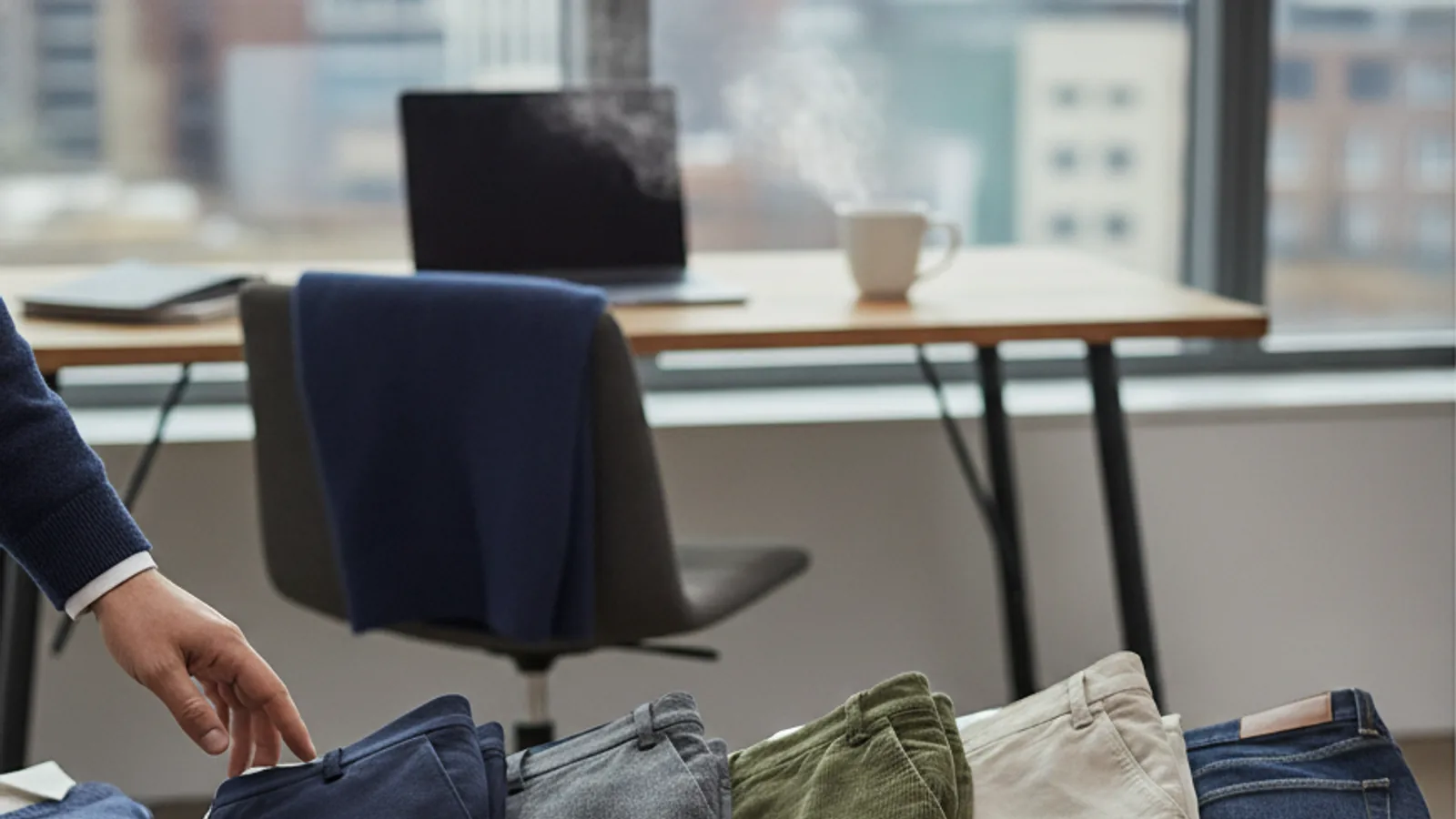
Color is what makes one pair of trousers appropriate for a video call, a client lunch, and a Friday evening out. Neutral colors like navy, gray, beige, and olive are the most versatile. They pair easily with a range of shirts and shoes and are appropriate for almost any dress code. Bright or pastel colors, like mustard or light pink, can be fun for casual days but may not work for formal meetings or may clash with your existing wardrobe. A practical check: when you pick a color, think of at least three tops you already own that match. For example, navy goes with white, light blue, gray, and many patterned shirts. Gray with a hint of brown is warmer than charcoal and fits both casual and formal wear. If you want a pattern, choose a subtle one like a glen plaid or a small check—it adds interest without being too loud. For your first few pairs, stick to two or three neutrals that you can wear interchangeably. This makes it easier to get dressed in the morning and reduces the number of trousers you need overall.
Order and Test Multiple Pairs at Home
When you have narrowed down your choices, order two or three pairs in different sizes or fits, but do not keep them all automatically. Ordering lets you compare the feel and look in your own lighting and with your own shoes. When they arrive, try them on and move around your home as if you are working: sit at your desk, walk up and down stairs, bend to pick something up, and stand for a while. Check for any discomfort, gaping at the waist, or pulling at the crotch. Also, examine the stitching and buttons—run your hand along the seams to ensure they are smooth. Make sure the pockets are useful: front pockets should not bulge, and back pockets should not strain. Once you decide which pair fits best, return the others. Do not be tempted to keep a pair that you might 'grow into' or 'get used to'. A good pair should be comfortable immediately. If you are unsure, wear the shortlisted pair for a few hours around the house to see how it feels at the end of the day—heavier trousers may feel great at first but become heavy by evening.
Build a Small Rotation and Care for Your Trousers
You do not need many pairs, but you do need a strategy to keep them looking good. Aim for three to five pairs that suit your week: one or two formal, one or two casual, and one that is comfortable for long days. Rotate them so that you do not wear the same pair two days in a row—this lets the fabric recover from stretching and reduces odor. At the end of each day, hang your trousers properly using a clip hanger to maintain the crease and prevent wrinkles. Brush off loose dirt with a clothes brush, and spot-clean stains immediately with a damp cloth. Air them out overnight before returning to the closet. Follow the care label for washing—many cotton and wool blends need gentle machine washing on cold and line drying. Do not over-wash: wash after four to five wears unless they are soiled. Use a steamer to remove wrinkles instead of ironing, which can create shine. A practical check: inspect your trousers regularly for small issues like loose threads or worn hems, and fix them promptly to extend their life.
Quick Reference
| Situation | Action | Why it helps |
|---|---|---|
| You have an important client presentation tomorrow and want to look formal but comfortable. | Choose a pair of tailored navy or charcoal trousers in a stretch wool or cotton blend, and pair them with a crisp white shirt and leather shoes. | A tailored fit and dark neutral color project professionalism, while the stretch fabric ensures you can sit, stand, and move without feeling restricted during the presentation. |
| You have a day of many video calls from home and want to feel productive but comfortable. | Wear a pair of chinos in a flexible cotton-elastane blend, with a relaxed straight fit, and a collared polo or button-down shirt on top. | Chinos strike a balance between smart and casual, and the stretch fabric lets you sit cross-legged or move freely without discomfort, helping you stay focused. |
| You are going to a casual team-building day with outdoor activities, then dinner afterward. | Put on a pair of durable yet polished five-pocket trousers in a stretch canvas or travel twill fabric, with a simple t-shirt and sneakers. | The durable fabric resists abrasion and stains, while the versatile style transitions from activities to a restaurant without needing a change. |
Common Issues
- Trousers become wrinkled quickly during the day, especially if you sit a lot.: Choose fabrics with a wrinkle-resistant finish or a blend of polyester, elastane, or wool. Also, hang your trousers on a clip hanger at night and use a fabric steamer in the morning. For emergencies, keep a travel-sized wrinkle-release spray in your desk drawer.
- Waistband feels too tight at the end of the day, especially after meals.: Opt for trousers with a small amount of stretch in the waist area, or choose a slightly higher rise that sits at your natural waist. Consider a flat-front design with a little give. Also, pay attention to your eating habits and hydration, and avoid tight belts.
- Trousers wear out at the thighs or knees after a few months.: Rotate your trousers and avoid washing them after every wear; wash on gentle cycles and line dry. Choose heavier fabrics with a denser weave for frequent use. For thin spots, reinforce them with interfacing or take them to a tailor before they become holes.
Advanced Tips
- Invest in tailoring: even a budget pair of trousers can look custom if you have the waist taken in and the hem adjusted to your perfect length.
- Experiment with subtle patterns like a small herringbone or a bird's eye weave—they add texture and depth, and they make it easier to match with various tops.
- Think about the shirt and shoe pairing as a system: keep your trousers in a color family so that you can mix and match without thinking, and you can build 15 outfits from 3 pairs of trousers.
Final Checklist
- Have you reviewed your weekly schedule and identified the most common formality level?
- Are your trousers made from a breathable, slightly stretchy fabric that resists wrinkles?
- Do your trousers allow you to sit, bend, and walk comfortably without pulling?
- Do you have at least 3 pairs in neutral colors that you can rotate and that match your existing tops?
FAQ
How many pairs of trousers do I need for a flexible working week?
Aim for three to five pairs. Two or three for formal or business-casual days, one or two for casual days, and optionally one pair that is especially comfortable for travel or long days. This number lets you rotate, so each pair lasts longer and stays in good shape.
What is the best fabric for trousers that need to work all week?
A cotton blend with a little elastane or polyester is a great all-rounder. Wool blends are excellent for formal days but may be warmer. The key is to choose a fabric that breathes, resists wrinkles, and has some stretch. Check the label and feel the fabric to ensure it is not too thin or too stiff.
Should I buy stretch trousers for a work environment?
Yes, stretch trousers are now common in many workplaces because they offer comfort and freedom of movement. Stretch fabrics like elastane or spandex make it easier to sit, bend, and stay active. Choose a modest amount of stretch so the trousers still hold their shape and do not look like leisurewear.