How To Choose A Watch Size For A Smaller Wrist
A practical step-by-step guide to how to choose a watch size for a smaller wrist, including preparation, instructions, common issues, tips, and next steps.
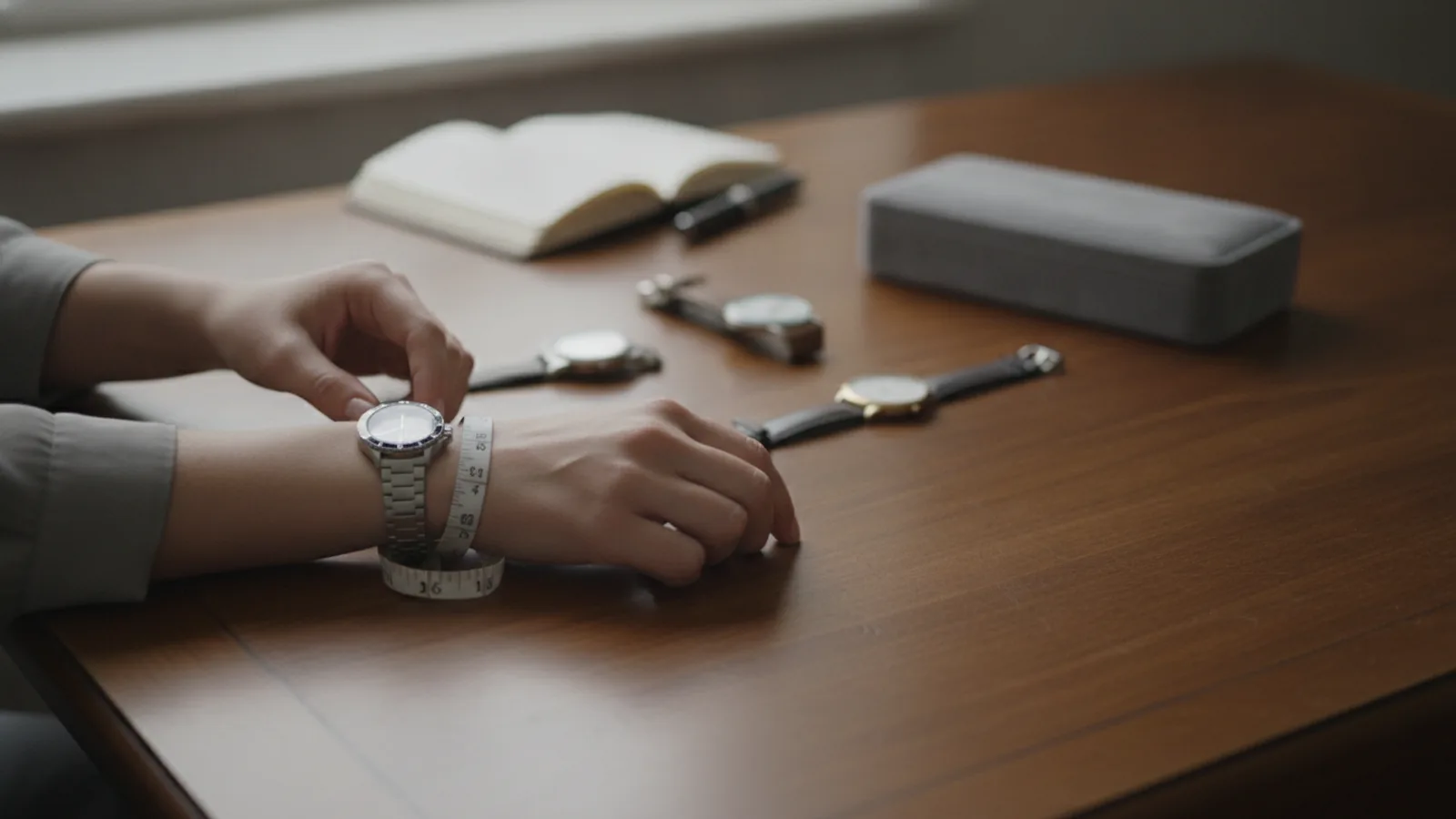
How To Choose A Watch Size For A Smaller Wrist
Choosing the right watch size for a smaller wrist involves more than just picking a smaller case. You need to consider case diameter, lug-to-lug length, case thickness, and the fit of the strap or bracelet. A well-fitting watch sits comfortably without sliding, pinching, or looking oversized. This guide walks you through measuring your wrist, interpreting watch dimensions, and evaluating the fit on your wrist. You'll learn how to use the lug-to-lug measurement as the true indicator of fit, how to assess case thickness for comfort, and how to adjust straps or bracelets for a secure and stylish look. The goal is to help you select a watch that complements your wrist size, feels comfortable all day, and matches your personal style. By the end, you'll have a clear checklist to apply when shopping for your next watch.
Fast Answer
- Measure your wrist with a soft tape or a strip of paper and a ruler; note the circumference in millimeters, then choose a case diameter of 34–38 mm and a lug-to-lug length of 40–44 mm for a proportional fit.
- Try the watch on your wrist and check that the lugs do not overhang the edges of your wrist, and the strap or bracelet fits snugly without pinching or leaving marks, allowing one finger to slide under the band.
Before You Start
- Soft measuring tape or a strip of paper and a ruler to measure your wrist circumference accurately.
- A mirror or a friend to help you view the watch from the side and above to check the lug fit.
- A list of your preferred watch styles and what activities you'll wear the watch for (e.g., formal, casual, sports).
- The watch you are considering, or its dimensions (case diameter, lug-to-lug, thickness) from the product page or manual.
Step-by-Step Instructions
Measure Your Wrist Circumference
Start by measuring your wrist to know the exact size you're working with. Wrap a flexible measuring tape around the widest part of your wrist, usually just below the wrist bone. If you don't have a tape, use a strip of paper, mark where it overlaps, and measure that length with a ruler. Write down the measurement in millimeters. This number is your baseline for selecting a watch. A typical adult female wrist is around 140–160 mm, and a male wrist is around 160–190 mm, but wrists vary significantly. Knowing your circumference helps you narrow down case diameters that will look proportional. For a smaller wrist, you'll likely aim for a case diameter between 34 and 38 mm, but the most critical measurement is the lug-to-lug, which we'll cover next. Take the measurement at the end of the day when your wrist may be slightly larger due to fluid retention, to ensure a comfortable fit.
Understand Lug-to-Lug Length
The lug-to-lug length is the distance from the top lug to the bottom lug, measured in a straight line down the case. This is the real indicator of whether a watch will fit your wrist without overhanging. To check if a watch will fit, place the watch on your wrist and look from the side. The lugs should not extend beyond the flat part of your wrist; they should follow the contour of your wrist. For a smaller wrist, a lug-to-lug length of 40 to 44 mm is often ideal. To find this measurement, check the watch's specifications on the product page or manual. If you're trying on a watch, you can use a ruler to measure from the top of one lug to the bottom of the other. Remember: a watch with a 36 mm case but a lug-to-lug of 48 mm will not fit well, while a 38 mm case with a 42 mm lug-to-lug might be perfect. Always prioritize lug-to-lug over case diameter.
Assess Case Thickness for Proportion
Case thickness affects how the watch sits on your wrist and how it appears from the side. A thick watch, even with a small diameter, can look chunky and may catch on sleeves or feel bulky. For a smaller wrist, a case thickness of about 9 to 12 mm is usually comfortable and proportionate. To assess thickness, look at the side profile of the watch. If it stands too tall, it might look like a hockey puck. When trying on a watch, move your wrist around to see if the case hits your hand bones or clothing uncomfortably. Thinner watches tend to slide more easily under cuffs, which is a plus if you wear dress shirts. However, some people prefer a slightly thicker watch for a sportier look. The key is balance: a thin case with a small diameter looks elegant, a thick case with a small diameter looks rugged. Choose based on your style and comfort, but remember that a thinner case is often easier to wear.
Evaluate Dial Size and Visual Weight
The dial is the visible face of the watch, and its size influences how large the watch appears. A dial that takes up most of the case (high dial-to-case ratio) can make a small watch look larger, while a dial with a thick bezel appears smaller. For a smaller wrist, you want the dial to sit comfortably within the width of your wrist, with some skin visible on either side. A good rule of thumb: the lugs should not overhang, and the dial should not cover the entire top of your wrist. When you look at the watch on your wrist, you should be able to see a bit of skin or the strap where it meets the lug, but not in a way that makes the watch look lost. Consider the color and design of the dial as well; a minimalist dial can make the watch look less bulky, while a busy dial might overwhelm a small wrist. Try on different styles to see what feels balanced.
Check Strap and Bracelet Fit
The strap or bracelet must fit securely without being too tight or too loose. A well-fitting strap should allow you to slide a pinky finger between the band and your wrist. For a smaller wrist, you might need to have a strap punched with additional holes or a bracelet sized with extra links removed. Many watch straps are available in multiple lengths; look for 'short' versions if standard is too long. When trying on a watch, fasten the clasp and check that the watch stays in place when you rotate your wrist. If the watch slides up and down more than a few millimeters, the strap is too loose. On the other hand, if it leaves deep marks on your skin, it's too tight. Leather straps can be adjusted by a professional, and metal bracelets can be resized. Mesh or NATO straps often have more adjustability. The right fit ensures comfort and prevents the watch from catching on things.
Try On and Wear Test for a Full Day
The final step is to wear the watch for a full day to ensure it's comfortable for daily use. Start with the watch on your wrist and go about your normal routine. Notice how it feels when you type, exercise, or move your wrist. The watch should not dig into your bones, cause skin irritation, or feel so heavy that you're aware of it constantly. Check that it doesn't slide from the top of your wrist to the side, as that can signal a loose fit. Also, observe whether the case or lugs catch on your clothing. Wear the watch in different environments, like at a desk or outdoors, to see if temperature affects the strap. After a few hours, take it off and inspect your wrist for any red marks or indentations; some temporary marks are normal, but deep or lasting marks indicate a poor fit. The best way to know if a watch fits is to live with it for a day.
Quick Reference
| Situation | Action | Why it helps |
|---|---|---|
| Your wrist is under 6 inches (150 mm) and you're considering a 40 mm watch case. | Instead, choose a case with a diameter of 36 mm or less and a lug-to-lug length under 44 mm, and try it on. | A 40 mm case on a very small wrist often overhangs because the lug-to-lug is too long, making the watch look like it's floating. |
| The watch you like has a lug-to-lug length of 48 mm but a case diameter of 38 mm. | Skip this watch or find a model with a shorter lug-to-lug, ideally under 44 mm, even if the case diameter is larger. | The lug-to-lug determines whether the watch sits flat on your wrist; a long lug-to-lug will hang over the edges, causing discomfort and an oversized appearance. |
| Your wrist measures 155 mm and you're choosing between a 34 mm and 38 mm case with similar lug-to-lug. | Try on both, but lean toward the 34 mm if you prefer a classic look, or the 38 mm if you want a modern statement, ensuring the lugs fit within your wrist. | Both can work, but the right choice depends on your style and how the watch feels; you want the lugs to align with the curvature of your wrist for a secure fit. |
Common Issues
- The watch lugs hang over the edges of your wrist, creating a gap.: Choose a watch with a shorter lug-to-lug length, typically under 45 mm for small wrists, or consider a different design like a cushion case that curves down.
- The watch strap is too long and the excess pokes out of the keeper.: Ask a jeweler to add extra holes or cut the strap to the correct length, or purchase a short-length strap specifically designed for smaller wrists.
- The watch looks too large or heavy when you wear it, even if the dimensions are within range.: Try a watch with a smaller case diameter or a thinner case, or opt for a titanium or resin case for a lighter weight; also, try a different strap material like a mesh or rubber that conforms better.
Advanced Tips
- Consider the shape of the lugs: curved lugs that wrap downward conform to the wrist better than straight, angular ones, allowing for a comfortable fit even with a slightly longer lug-to-lug.
- Pay attention to the strap width at the lugs: a narrower strap (18–20 mm) can visually slim the watch, making it appear less bulky on a small wrist.
- When trying on a watch, bend your wrist and move your hand side to side to simulate everyday movements; if the watch slides or pinches, the fit is not optimal, even if it looks fine standing still.
Final Checklist
- Measure your wrist circumference and compare it to the case diameter and lug-to-lug length of any watch you consider.
- Confirm that the lugs do not overhang your wrist when the watch is worn centered.
- Verify that the strap or bracelet fits snugly with one finger sliding underneath, and that there is no excessive sliding.
- Wear the watch for at least a few hours to ensure it does not cause discomfort or leave deep marks.
FAQ
What is the best watch case size for a 6-inch wrist?
For a 6-inch (152 mm) wrist, a case diameter of 34 to 38 mm is generally safe, but the lug-to-lug length is more critical; aim for 40 to 44 mm. Always try on the watch to ensure the lugs align with your wrist and the watch feels balanced.
How do I know if a watch is too big for my wrist?
A watch is too big if the lugs extend beyond the edges of your wrist, if you can see gaps between the lugs and your skin when looking from the side, or if the watch slides around on its own. A proper fit keeps the watch centered and comfortable.
Do women's watches fit men with small wrists?
Yes, a 'women's' watch is often 34 mm or smaller, which can be a great fit for a man with a very small wrist. The key is to choose a design that matches your style, regardless of the classification, and focus on the measurement labels.