How To Choose A Compact Weekender Bag For Short City Breaks
A practical step-by-step guide to how to choose a compact weekender bag for short city breaks, including preparation, instructions, common issues, tips, and next steps.
How To Choose A Compact Weekender Bag For Short City Breaks
Choosing a compact weekender bag for short city breaks means finding a balance between portability and packing capacity. This guide walks you through key factors such as size, weight, organization, materials, and comfort, ensuring you pick a bag that suits your travel style and needs. By following these steps, you can avoid common pitfalls and enjoy a hassle-free trip.
Fast Answer
- Look for a bag with a capacity between 25 and 35 liters, which fits 2-3 days of clothing and essentials without being too bulky for overhead compartments or under-seat storage.
- Choose a lightweight, durable bag with comfortable straps, multiple compartments, and water-resistant material to keep your items organized and dry in various weather conditions.
Before You Start
- Measure your available storage space: check the dimensions of your suitcase, closet, or the space under train seats to ensure the weekender will fit.
- Review your typical city break activities: if you plan to walk a lot, look for a bag with ergonomic straps and a sternum strap.
- Consider your packing style: if you prefer to roll clothes, a wide opening with a clamshell design is easier; if you pack cubes, a simple main compartment works.
- Check the carry-on size restrictions of your preferred airline or train provider, as some have specific limits.
Step-by-Step Instructions
Assess Your Typical Packing Needs
Start by listing what you usually take on a weekend trip: a few outfits, toiletries, electronics, and maybe a change of shoes. Estimate the volume by roughly measuring how much space those items occupy, perhaps using a reference like a standard backpack or a cardboard box. This gives you a target capacity, typically between 25 and 35 liters for a compact weekender. If you pack heavily for just two days, you might need a bit more, but avoid oversizing because a larger bag invites you to pack more than necessary, making it heavier and harder to carry in a city. A simple way to check: if you can easily lift the filled bag without effort and it fits under a seat or in a locker, the size is right for your needs.
Evaluate the Bag's Weight and Materials
When you pick up a potential bag, its empty weight should feel light, ideally under 1.5 kilograms, because any empty weight directly adds to the strain when the bag is full. Materials like durable nylon or polyester are good choices; they resist wear and are relatively light. Canvas can be heavier but offers a classic look. Check if the fabric has a water-repellent coating, though you should still use a rain cover if rain is likely. To test the material, run your hand over it; it should feel smooth without snags. Look at the bottom of the bag, as it often gets scraped. A reinforced or padded bottom adds durability without much weight. A practical check is to gently twist the fabric; if it wrinkles and stays, it may be less durable. The goal is to have a bag that endures the rigors of city travel without becoming a burden.
Inspect the Straps and Handles for Comfort
Long walking sessions can make a poorly designed strap unbearable, so examine the straps carefully. Look for padded shoulder straps that are wide (at least 5 cm) to distribute weight. The handle on top should be thick and sturdy, able to carry the bag when you are in a hurry. Also, check for a detachable cross-body strap; this is a great feature that gives you an option to distribute weight across your body, which is more ergonomic for city walking. To test the comfort, load the bag with about 5 kilograms of weight and wear it around the store if possible. Adjust the straps and see if they slip or dig into your shoulders. A sternum strap is a bonus that prevents the straps from sliding, especially when you are moving quickly through crowds.
Examine the Organization and Compartments
A good weekender should have a main compartment that is easy to access: a wide opening or a clamshell design helps. Inside, look for at least one zippered pocket to secure small valuables like your passport or phone. A separate shoe compartment or a water-resistant pouch for toiletries is useful to keep dirty or wet items away from clothes. Exterior pockets are handy for quick access to items like a water bottle or a book. However, too many pockets can add weight and make it harder to find things. To check the organization, imagine how you will pack: will you be able to reach your items without digging everything out? A practical test is to put a few objects inside and try to retrieve each without opening the whole bag. The goal is to have a system that supports your style, not to complicate it.
Consider the Bag's Overall Dimensions and Carry Style
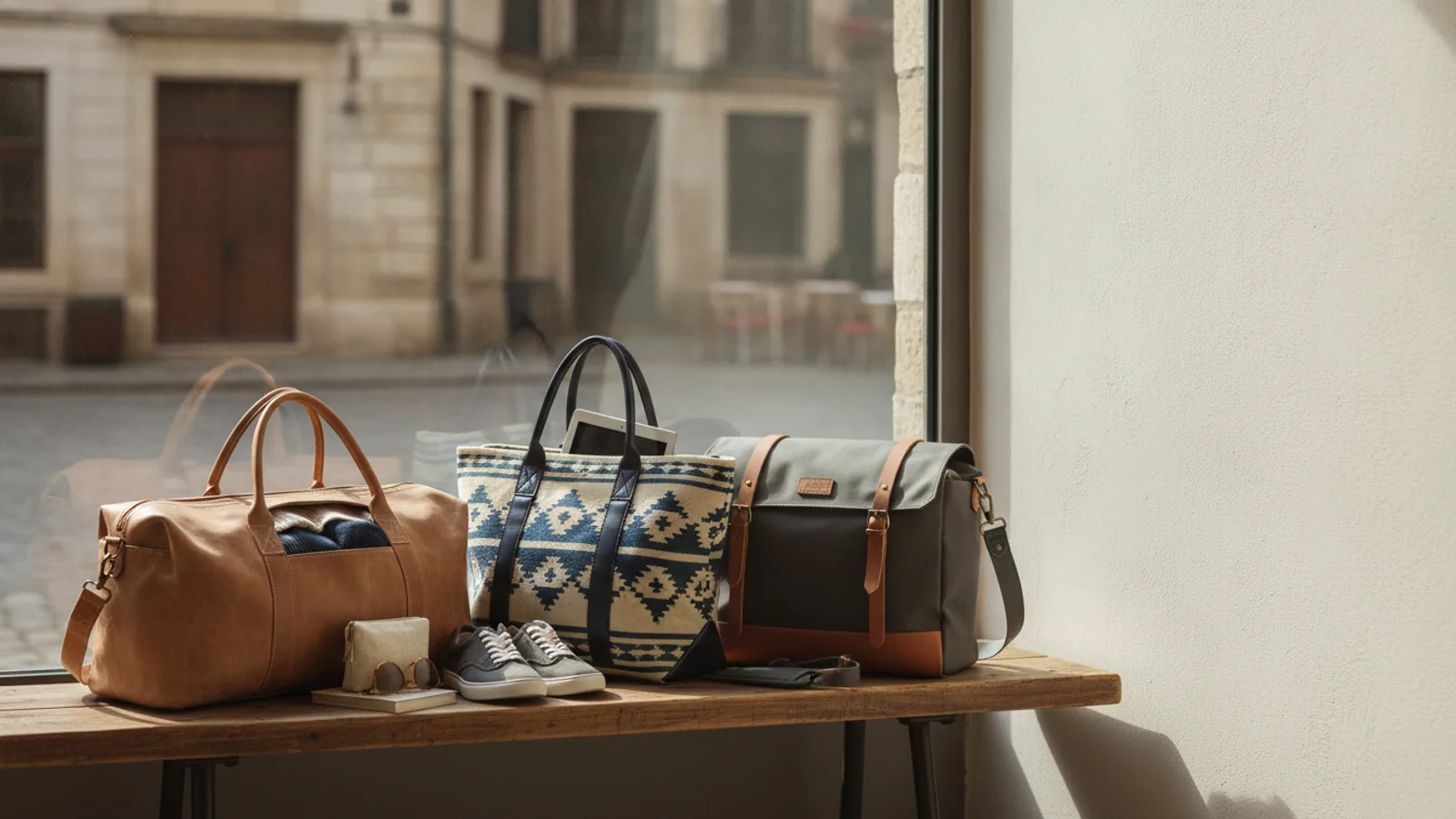
The size of a weekender typically ranges from 45 to 55 cm in length, 25 to 35 cm in height, and 20 to 25 cm in depth. These dimensions are ideal for fitting in overhead bins or under a seat, but you must verify against the specific rules of the transportation you plan to use. For a compact weekender, the bag should be small enough to maneuver through crowded areas and store in tight spaces. When you are deciding between a duffel with handles and a backpack-style, think about how you will use it: a duffel is easier to carry by hand, but a backpack leaves your hands free. Some bags offer a hybrid design with both straps, giving you flexibility. Consider your own mobility and the typical duration of walking in the city. A compact bag should feel like a natural extension of your body, not an obstacle.
Perform a Final Test with Your Items
Before making a purchase, bring a few essential items or use the store's test weights to simulate your packing. Place your usual items into the bag, making sure zippers run smoothly without strain. Then wear the bag for at least five minutes, walking around and maybe climbing stairs if possible. Check whether the bag feels balanced and whether it tugs on your shoulders or back. Also, test the zippers and buckles repeatedly to ensure they do not stick or break. A practical check is to see if the bag stands upright on its own when packed; if it flops over, it may be hard to pack and access. Finally, inspect the workmanship: are there loose threads? Are the seams reinforced? This final test helps you decide if the bag is worth the investment, ensuring it matches your needs and lasts for many trips.
Quick Reference
| Situation | Action | Why it helps |
|---|---|---|
| You will be walking for more than 20 minutes from the station to your accommodation. | Choose a bag that converts into a backpack or has ergonomic shoulder straps with a sternum strap to distribute the load evenly. | This reduces strain on one shoulder and keeps your hands free, making the walk more comfortable and less tiring. |
| You plan to bring a separate pair of shoes or need to keep damp items away from clothes. | Opt for a weekender with a dedicated shoe compartment or a water-resistant interior pouch for toiletries and wet gear. | This prevents dirt and moisture from damaging your clothes and keeps everything organized for easy access. |
| You are using a budget airline that enforces strict carry-on size limits. | Measure the bag's dimensions and compare them with the airline's published restrictions, and be ready to adjust your packing if the bag is borderline. | Avoids the hassle of checking your bag at the gate, saving time and money, and ensuring a smooth boarding experience. |
Common Issues
- The shoulder strap keeps slipping off your shoulder when walking.: Add a non-slip pad to the strap or use a bag with a rubberized strip on the inside. Also, adjust the strap length so it sits snugly.
- The main zipper gets stuck when the bag is full.: Avoid overpacking the bag beyond its intended capacity. If the zipper is problematic, gently pull the fabric away as you zip, and apply a small amount of zipper lubricant to smooth the mechanism.
- The bag gets dirty or stains easily in the city environment.: Treat the fabric with a fabric protector spray before your trip. In case of stains, spot-clean with a damp cloth and mild soap as soon as possible.
Advanced Tips
- Consider a bag with a detachable daypack or a separate padded sleeve for a tablet or a small camera, giving you flexibility without extra bulk.
- Think about the climate of your destination: if it's rainy, choose a bag with a rain cover or a waterproof inner liner to keep your belongings dry.
- If you often travel with a carry-on suitcase, look for a weekender that has a trolley sleeve on the back so you can slide it onto the suitcase handle for easy transport.
Final Checklist
- Bag fits within the size limits of your preferred airline or train company and fits under the seat or in the overhead bin.
- The bag has comfortable, padded straps that distribute weight evenly, and the handles are sturdy enough to carry when full.
- It has enough compartments to organize your items, including a separate space for shoes or toiletries, and all zippers run smoothly.
- The material is durable, water-resistant, and the bag is lightweight enough to carry for extended periods without discomfort.
FAQ
What is the ideal capacity for a compact weekender bag?
The ideal capacity is usually between 25 and 35 liters. This is enough for two to three days of clothing, toiletries, and other essentials, while still being small enough to carry easily and fit in storage spaces. If you are a light packer, you might even get away with 20 liters, but anything larger than 35 liters becomes less compact and harder to manage in a city break.
Should I choose a duffel style or a backpack style?
It depends on how you will use it. A backpack style is better if you will walk a lot, as it distributes weight evenly and frees your hands. A duffel style with a shoulder strap is easier to slide over your shoulder and can be more convenient when you need quick access. Some bags offer both options, so consider your typical travel habits and choose the one that feels most comfortable and practical.
How can I keep my clothes from getting wrinkled in a weekender?
Rolling your clothes instead of folding them reduces wrinkles, and using packing cubes can help keep them compressed and organized. You can also use tissue paper or dry cleaning bags to cushion items, and place heavy items at the bottom of the bag. When packing, fill the bag evenly to avoid shifting, and consider using the compression straps if your bag has them.