How To Build A Practical Knitwear Rotation For Cooler City Days
A practical step-by-step guide to how to build a practical knitwear rotation for cooler city days, including preparation, instructions, common issues, tips, and next steps.
How To Build A Practical Knitwear Rotation For Cooler City Days
This guide will help you build a practical knitwear rotation for cooler city days, focusing on layering, fabric choice, and care to keep you warm, stylish, and adaptable. You'll learn how to assess your climate, select versatile pieces, organize them into a weekly plan, and adjust for different activities.
Fast Answer
- Start by choosing a color palette of 3-5 neutral tones, then pick knitwear in different weights (light, mid, heavy) that all coordinate, ensuring you can layer them for varying temperatures.
- Build a rotation of 5-7 knit garments that you can mix and match, and store them in a way that keeps them accessible and wrinkle-free, using a weekly schedule that matches your activities.
Before You Start
- Assess your local city climate for the next three months, noting typical morning, midday, and evening temperatures to determine the range of knit weights you'll need.
- Collect all your current knitwear and sort them by weight (light, mid, heavy) and color, removing any items that are pilled, stretched, or too worn for city use.
- List your typical city day activities (commute, office, errands, dinners) and estimate the temperature in each environment, so you know when a lightweight knit is enough or when you need a heavier layer.
- Check your storage space and decide on a system: use shelves for folded knits, hangers for cardigans, and drawers for thinner items, ensuring each piece is visible and easy to grab.
Step-by-Step Instructions
Assess Your City's Temperature Range
Begin by understanding the temperature variations you'll encounter during a typical city day. Look up the average highs and lows for the season, but also note indoor temperatures in offices, shops, and public transit, as they can be significantly warmer. For example, your morning commute might be chilly, but the office could be heated to a comfortable level. You'll want a rotation that includes a mix of fine-gauge knits for mild days, mid-weight options for cooler days, and a heavy piece for cold snaps. A practical check is to list the actual temperatures you experience for one week and identify the gap between the coldest and warmest moments. This matters because wearing a heavy knit when it’s too warm will make you uncomfortable, and a light knit when it’s cold will leave you shivering. By understanding your range, you can choose pieces that layer well and adapt to changing conditions throughout the day.
Choose a Cohesive Color Palette
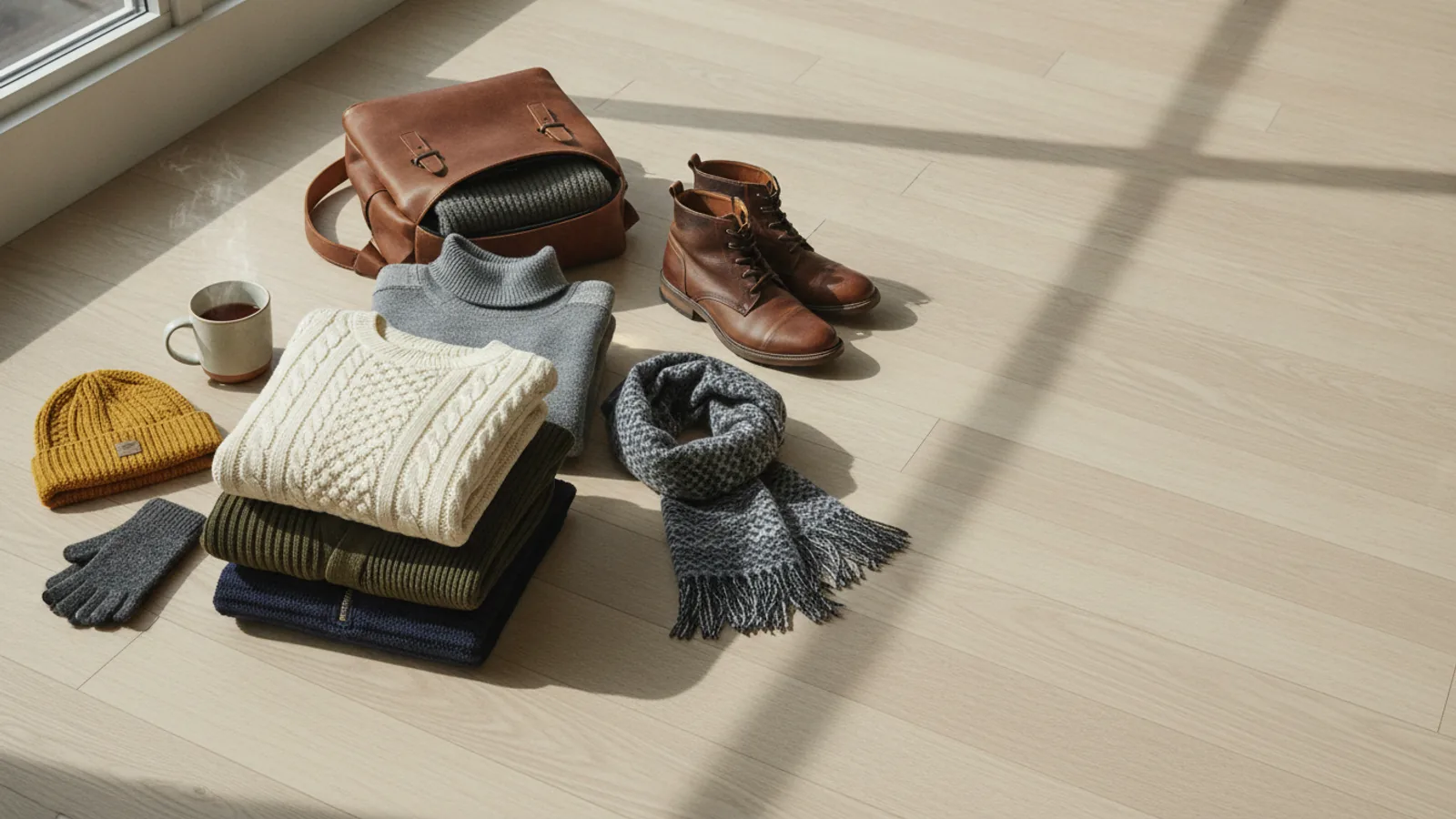
Select a palette of three to five core colors that coordinate with each other and with the rest of your wardrobe. Stick to neutrals like navy, charcoal, camel, cream, and olive, as they are timeless and mix easily. You can add one accent color, such as a soft rose or forest green, for interest. The key is that every knitwear piece you choose should pair with at least two others in your rotation. For example, if you have a cream crew neck, a navy cardigan, and a charcoal turtleneck, you can mix them with different trousers and outerwear. A practical check is to lay out the knitwear pieces you plan to keep and ensure they all work together in at least three combinations. This matters because a cohesive palette makes it easy to get dressed quickly, reduces the need for extra purchases, and ensures that your rotation looks intentional rather than accidental, even on rushed mornings.
Select Knitwear in Different Weights
Your rotation should include at least one lightweight knit (such as a fine merino or cotton blend) for mild days, two mid-weight pieces (like a classic crew neck or v-neck) for typical cool days, and one heavy piece (perhaps a thick fisherman or cable knit) for cold spells. Also, consider a cardigan for easy layering. Lightweight knits are useful for transitioning seasons and can be worn under a mid-weight layer. Mid-weight knits are your everyday workhorses. Heavy knits are for when you really need warmth. A practical check is to hold each knit up to the light; if you can see through it, it’s likely light; if it has noticeable bulk, it’s heavy. This matters because having the right weight ensures you can layer effectively without overheating or feeling underdressed. By mixing weights, you can create outfits from 10-20°C (50-68°F) by using a t-shirt underneath, and from 0-10°C (32-50°F) by adding a heavy cardigan.
Organize Your Knitwear for Visibility
Store your knitwear so that you can see all your options at a glance, making it easy to choose on a busy morning. Fold heavy knits and place them on a shelf, stacking them so they don't stretch. Hang lighter knits on padded hangers to avoid marks at the shoulders, or fold them in drawers. Use a shelf or a section of your closet solely for knitwear, and arrange them by weight and color. A practical check is to look at your storage and ensure that you can see each piece without moving others. This matters because if you forget what you have, you'll likely fall back on the same two or three pieces, which defeats the purpose of a rotation. Visible storage also helps you keep track of what needs washing or mending, so your rotation remains fresh and well-maintained.
Plan a Weekly Rotation Schedule
Create a simple weekly plan based on your typical activities. For weekdays, you might have a set of work outfits, and on weekends, you can be more casual. For example, Monday could be a fine merino crew neck under a blazer, Tuesday a mid-weight v-neck with a scarf, Wednesday a turtleneck for a chilly commute, Thursday a cardigan over a shirt, and Friday a slightly more relaxed but still polished knit. On the weekend, you can wear your heavier knit for a light hike or your lightest knit for a coffee run. A practical check is to write out the plan for one week and see if any piece is repeated too often. This matters because a rotation helps even out wear and tear, and it also ensures you are appropriately dressed for each day's weather and events. By planning, you also avoid the morning stress of deciding what to wear, which saves time and energy.
Care for Your Knitwear to Extend Lifespan
Proper care is essential to keep your knitwear looking good and lasting for many seasons. Always check the care label for specific instructions, but generally, hand wash in cold water with a gentle detergent, or use a delicate machine cycle in a mesh bag. Never wring or twist; instead, press out excess water with a towel and reshape the item on a flat drying rack. Store folded, not hung, to prevent stretching, and use cedar balls or lavender sachets to keep moths away. A practical check is to feel the fabric after washing: if it feels rough or has lost its shape, you may need to adjust your method. This matters because well-cared-for knits maintain their insulation and appearance, which means your rotation continues to work effectively. If you see pilling, use a fabric comb to remove it gently, and store heavy knits in a breathable garment bag during summer.
Quick Reference
| Situation | Action | Why it helps |
|---|---|---|
| You have a busy day with morning chill, afternoon warmth, and evening coolness. | Wear a lightweight knit top underneath, and carry a mid-weight cardigan or a fine scarf to layer on and off as temperatures shift. | This gives you flexible insulation so you can adjust without searching for a change of clothes or feeling too warm or cold. |
| You have a formal event or an important office meeting and need a polished look. | Choose a fine-gauge turtleneck or crew neck in a neutral color, and pair it with tailored trousers and a blazer or structured coat. | A fine knit reads as smart and sophisticated, and the neutral palette ensures you look put-together without being too casual. |
| You are heading out for a casual weekend walk and expect a light drizzle. | Put on a heavier knit like a chunky cardigan or a cable-knit sweater over a moisture-wicking base layer, and top it with a water-resistant shell if needed. | Heavy knits provide warmth, the base layer manages sweat, and the shell protects against rain while preserving the knit's loft. |
Common Issues
- Your knitwear becomes stretched out at the elbows or shoulders.: Always fold knits and store them flat; when you hang a sweater, use a padded hanger and never hang heavy knits. If a sweater has already stretched, you can shrink it gently in warm water, but test on a small area first.
- Your knits are pilling and look old before their time.: Use a fabric comb or a battery-operated pill shaver to remove pills. To prevent pilling, wash knits inside out and avoid rubbing against rough surfaces like backpack straps. Also, choose higher twist yarns or smoother fibers like merino for less friction.
- You find it hard to coordinate colors and often end up wearing the same combination.: Create a capsule of neutral-colored knits and take a photo of each outfit you try. Keep a list of at least five different combinations on your phone. Also, invest in one versatile cardigan that goes with many pieces to instantly multiply outfit options.
Advanced Tips
- To elevate your rotation, incorporate a few textured knits like cable, ribbed, or waffle weaves that add visual interest without breaking a neutral palette.
- Learn basic sweater mending techniques, such as darning a small hole or fixing a dropped stitch, to prolong the life of your favorite knits and keep them in rotation.
- Consider using a clothes steamer instead of ironing; it relaxes fibers and eliminates wrinkles that can make knits look tired, especially suitable for delicate wools.
Final Checklist
- Verify that you have at least one light, one mid-weight, and one heavy knit that all coordinate in color.
- Plan a one-week rotation schedule with at least five distinct outfits using your knitwear pieces.
- Store all knitwear folded on shelves or hung on padded hangers, and inspect each piece for stains or damage.
- Test your rotation for a week and note if any piece needs washing or mending, and adjust your schedule accordingly.
FAQ
How many knitwear pieces do I need for a practical rotation?
Aim for a minimum of five to seven pieces. This allows you to rotate them throughout the week and still have variety, while ensuring you have all the weights you need. For example, include two light knits, two mid-weight crew necks, a cardigan, and a heavy turtleneck. This gives you enough for a week without repeating the same outfit twice.
Can I machine wash all my knitwear?
It depends on the fiber and the care label. Many modern knits are machine washable on a delicate cycle, but some wools and cashmeres are hand-wash only. Always check the label. If in doubt, hand wash in cold water with a wool-specific detergent and lay flat to dry. This prevents shrinking and felt.
What is the best way to remove wrinkles from knitwear without using an iron?
Use a steamer if you have one, or hang the garment in the bathroom while you take a hot shower. The steam helps relax the fibers. You can also lay the knit flat and gently smooth it with your hands, then fold it properly. Avoid ironing directly, as it can flatten texture and cause shine.